
What This Guide Covers
Choosing a floor can feel harder than it should. Two luxury vinyl click floors can look the same online and still be very different once they’re in your home — one might dent easily, another might work in a kitchen but not in a conservatory.
This guide draws on hands-on experience fitting and comparing luxury vinyl click flooring in real homes, not just manufacturer spec sheets, so the advice reflects what actually tends to matter once a floor is down and in daily use.
So what is it? Luxury vinyl click flooring is vinyl that clicks together without glue. Each plank or tile has an edge that snaps into the next one, giving a floating floor that looks like wood or stone but feels warmer than tile. Most people can fit it themselves.
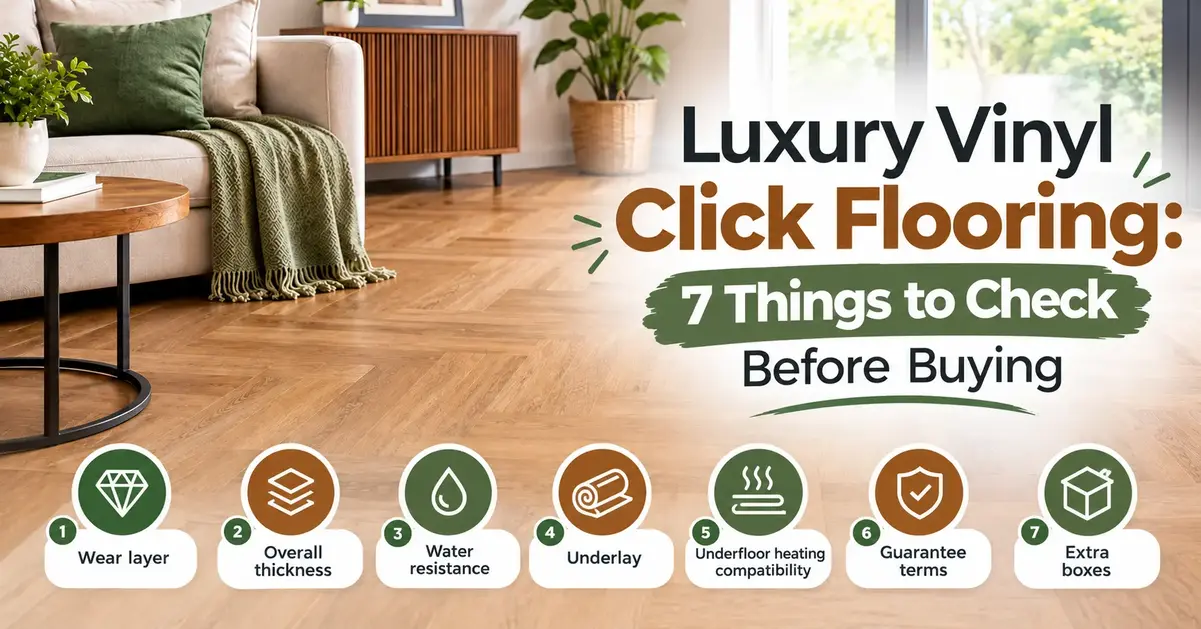
Before you buy, here are 7 things to check that will help you avoid picking the wrong floor.
Quick Answer
Luxury vinyl click flooring holds up well in kitchens, hallways and living rooms. Look for a rigid core, match the wear layer to the traffic it will face, and get fitting instructions you can actually follow. Bathrooms and conservatories are a different story — brands disagree on these spaces, so always check the specific product page.
What Is Luxury Vinyl Click Flooring?
It’s vinyl flooring made in layers. A printed layer gives the wood or stone look, while a clear wear layer on top protects it. Underneath is the core, which gives the floor its strength. The edges lock together so the floor floats over the subfloor instead of being stuck down.
In short, the top layer takes the wear and the core decides how the floor feels underfoot. You’ll see it called LVT click flooring or click vinyl flooring, and sometimes LVP when the pieces are long planks — it’s all the same basic idea.
Click Vinyl Flooring vs Glue Down
Luxury vinyl click flooring floats over the subfloor, and since the planks simply lock together, there’s no adhesive and no drying time — which is why they suit DIY fitting so well. Glue down vinyl, on the other hand, is stuck to the subfloor, making it harder to fit and even harder to remove later. Click floors still need a flat, clean subfloor, since the locking edges can’t hide big dips.
SPC vs WPC: Which Core Is Best?
The core is the middle layer of the floor, and it changes how the floor feels and how it handles temperature changes.
- SPC (stone plastic composite): a very hard, dense core. This is the rigid core option that stays stable through temperature changes, though it can feel harder underfoot.
- WPC (wood plastic composite): a softer core with a little give. It feels warmer and quieter but can dent more easily.
- Flexible click vinyl: a thinner core that bends, which needs a very flat subfloor to perform well.
If you’re unsure which to pick, SPC is generally the safer choice for rooms that get direct sun or heat.
Expert tip: In side-by-side comparisons, the core type is the single biggest factor in how a floor feels underfoot — more so than price or brand. If you can, stand on a sample of each core type before deciding.
7 Things to Check Before Buying
- Wear layer – This clear top coat protects the print from scratches and stains. Wear layers typically start around 0.3mm and go past 0.55mm. If kids, pets or a busy kitchen will test the floor, go thicker. In practice, thinner wear layers are usually the first place visible wear shows up within the first couple of years.
- Overall thickness – Most click floors sit between about 4mm and 8mm. Thicker floors feel more solid and hide tiny bumps better, but check that the added height still works with your doors and trims.
- Water resistance – Water resistant and waterproof aren’t the same thing. For genuinely wet-prone areas, check exactly what the maker means by “waterproof,” and whether that protection covers the joints too.
- Underlay – Some floors come with underlay already attached; others need one bought separately. Don’t double up if the floor already has it built in.
- Underfloor heating compatibility – Many click floors work with underfloor heating, but limits vary by brand, so this is always worth confirming before you order.
- Guarantee terms – Read what’s actually covered. Some guarantees apply to homes only and exclude shops or offices.
- Extra boxes – Buy around 10% more than your measured area, to account for cuts and mistakes during fitting. This margin has saved more than one rushed reorder when a delivery batch has a slightly different shade.
Where It Works Best
Kitchens deal with spills and heavy foot traffic, so the best luxury vinyl click flooring for kitchens pairs a thicker wear layer with a rigid core.
Hallways, living rooms and bedrooms are usually a safe bet too — just make sure the subfloor is flat and dry before fitting.
Bathrooms and conservatories are the exceptions worth double-checking, since suitability for wet or temperature-swinging rooms varies significantly from brand to brand.
Click Flooring Pros and Cons
The good side:
- No glue or mess during fitting
- Looks like real wood or stone
- Warmer and softer underfoot than tile
- Easy to clean and maintain
The downsides:
- Heavy items can leave dents
- Quality varies a lot between brands
- Damaged planks can’t be sanded down like real wood
How to Fit It
Most people can fit a normal-sized room over a weekend, though it’s always best to follow the manufacturer’s specific instructions where they differ from general advice.
- Bring the boxes into the room and let them acclimatize for the time stated on the pack.
- Make sure the subfloor is clean, dry and flat — fix any dips or bumps before you start.
- Add underlay if your floor requires one.
- Leave a small expansion gap along every wall, since the floor moves slightly and needs room to do so.
- Start at a straight wall and click the planks together row by row, offsetting the joints so they don’t line up.
- Trim the final row to fit, then cover the gap with skirting or trim.
- Since it’s a floating floor, avoid fixing heavy units or fittings through it.
Frequently Asked Questions
Why Is Luxury Vinyl Flooring Separating?
Luxury vinyl flooring can separate due to improper installation, uneven subfloors, temperature changes, or moisture getting beneath the planks. Poor-quality click-lock joints or insufficient expansion gaps can also cause the flooring to pull apart over time.
Is luxury vinyl click flooring waterproof?
Some are, some are only water resistant. Check exactly what the brand means by “waterproof” and whether that extends to the joints.
Can you use click vinyl flooring in a bathroom?
Only if the specific product is rated for it — many brands don’t recommend their floors for wet rooms.
Does click vinyl flooring need underlay?
It depends on the floor. Some come with underlay pre-attached; if yours doesn’t, you’ll need to buy one separately.
Can you fit click vinyl over old flooring?
Often yes, provided the existing floor is flat, clean and dry. Check the product page for specific allowances.
Can you use vinyl click flooring with underfloor heating?
Many are compatible, but limits differ between brands, so confirm before buying.
Is click vinyl flooring suitable for a conservatory?
This depends entirely on the brand and product — always follow the specific guidance given for that item.
Can you mop click vinyl flooring?
Yes, a damp mop works well for most floors. Avoid leaving standing water, and skip steam mops unless the manufacturer specifically allows them.
How long does click vinyl flooring last?
This depends on quality and wear layer thickness. Guarantees can run for many years, but it’s worth reading the fine print.
Final Thoughts
Luxury vinyl click flooring is a practical choice for most homes. Check the wear layer and the core, read the rules around water and heating, and buy a little extra material. Get these basics right, and you’ll end up with a floor that looks good and lasts.