
What This Guide Covers
You’ve probably heard both terms in the same meeting, maybe even in the same sentence. Agentive AI. Agentic AI. They sound almost identical. That’s the problem right there. They’re not the same thing, and mixing them up can actually cost you. A tool that only suggests something needs very different oversight from one that just goes ahead and acts. So here’s what agentive AI actually means, how it’s different from agentic AI, and which one fits where.
Quick Answer
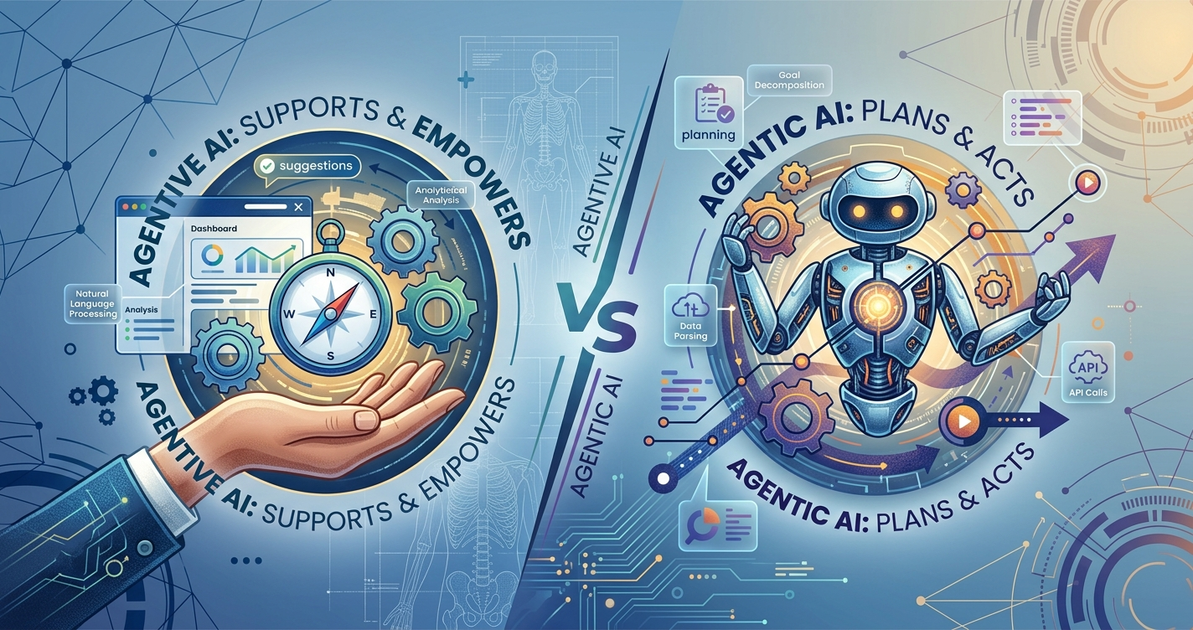
Agentive AI’s job is simple. It offers suggestions, predictions, drafts, whatever helps, but a human still has to approve it or act on it. Agentic AI takes that further. It can plan, decide and carry out the task itself, with barely any human input needed. In short, it helps you do something, while the other does it for you.
What Is Agentive AI?
Agentive AI is built to assist, not replace. It looks at the information, spots the patterns, and hands you a recommendation, a draft, maybe just a next step. You’re still in charge. You decide what happens next.
A fraud detection tool that flags a dodgy transaction and asks you to check it? That’s agentive AI. So is an email assistant that drafts a reply and waits for you to hit send. It does the thinking that leads up to a decision. Not the deciding itself.
What Is Agentic AI?
Agentic AI takes the extra step. It can break a goal into smaller tasks, choose which tools to use, carry out those tasks and adjust its approach based on what happens along the way, all without someone approving each step.
Say you give an agentic system a goal, something like sort out a customer’s refund. It checks the order. Applies the policy. Issues the refund. Sends the confirmation email. All on its own. A human might still set that goal, and they’ll probably glance at the outcome, but nobody’s approving each of those steps along the way.
Agentive AI vs Agentic AI
The difference comes down to who makes the final call.
Agentive AI offers suggestions, drafts or recommendations. A person reviews and approves each one. Lower risk because a human checks the output before anything happens.
Agentic AI plans and carries out multi-step tasks with little human input. Higher risk because mistakes can happen before anyone notices, so it needs closer monitoring.
There’s no overall winner here. It comes down to one thing: how comfortable you are letting the system run without you checking in first.
Where Agentive AI Is Used
- Writing and content tools: drafting emails, reports or social posts for a person to edit and approve.
- Customer service: suggesting replies to an agent, who picks or edits the best one before sending.
- Finance and fraud checks: flagging unusual activity for a human to investigate rather than blocking it automatically.
- Healthcare support tools: highlighting patterns in scans or records for a clinician to review, not to diagnose on its own.
- Design and coding assistants: suggesting code or layout changes that a developer or designer accepts, edits or rejects.
Where Agentic AI Is Used
- Customer support automation: resolving a full ticket end to end, from reading the query to issuing a refund.
- Research and analysis: pulling data from multiple sources, comparing it and producing a finished report.
- IT operations: spotting an issue, running the fix and confirming the system is back online.
- Scheduling and admin: booking meetings, rearranging calendars and sending updates without a person managing each step.
Benefits of Agentive AI
- Faster decisions. A person spends less time on the groundwork and more time reviewing the outcome.
- Easier to trust. Because a human checks the output, mistakes are usually caught before they cause harm.
- Simpler to roll out. Teams don’t need to rebuild approval processes, since a person is still in the loop.
Benefits of Agentic AI
- Less manual work. Multi-step tasks get done without someone managing each stage.
- Faster end to end completion. There’s no waiting for a person to review each individual step.
- Can handle more complex workflows. Multiple tasks and tools get coordinated automatically.
Risks to Consider
- Agentive AI systems can still get the suggestion wrong, so people need to stay engaged rather than approving on autopilot.
- Agentic systems can act on a bad plan before anyone reviews it, so clear goals, limits and monitoring matter more here.
- Vendors sometimes call a tool agentic when it’s really agentive. Ask what actually happens without a human clicking approve, not just what the marketing page says.
How to Choose Between Them
Start with how costly a mistake would be. If a wrong output could cause real harm, like an incorrect payment or a missed medical flag, agentive AI keeps a person in the loop where it matters.
If the task is repetitive, low risk and well defined, agentic AI can save time without much downside.
Many teams use both. One handles the routine, predictable work, while the other supports the judgement calls that still need a person.
Frequently Asked Questions
Is agentive AI the same as agentic AI?
No, not even close. Agentive AI assists, the person still makes the call, while agentic AI can plan and act on its own with barely any human input needed. That difference also decides which one’s safer. Agentive AI, generally, since a person reviews the output before anything actually happens, so mistakes tend to get caught early. Agentic AI needs more monitoring since it can act without that check.
Can a tool be both agentive and agentic?
Some tools offer both modes, acting on their own for routine tasks and asking for approval on anything higher risk.
Is agentive AI a type of generative AI?
Not exactly. Generative AI creates content like text or images. Agentive AI often uses generative AI to produce its suggestions, but the key point is that a person still approves the result.
Do businesses need agentic AI to compete?
Not always. Many businesses get real value from agentive AI alone, especially where mistakes are costly. Agentic AI suits repetitive, well defined tasks more than judgement heavy ones.
What skills do teams need to work with agentic AI?
Clear goal setting, defined limits on what the system can do, and ongoing monitoring matter more than technical skill alone.
Final Thoughts
Same-sounding names, different jobs entirely. One keeps a person making the final call, the other just gets on with things, with less human input needed. So forget the label for a second. What actually matters is matching the tool to how much oversight the task needs, and watching how it behaves once it’s put to work.