
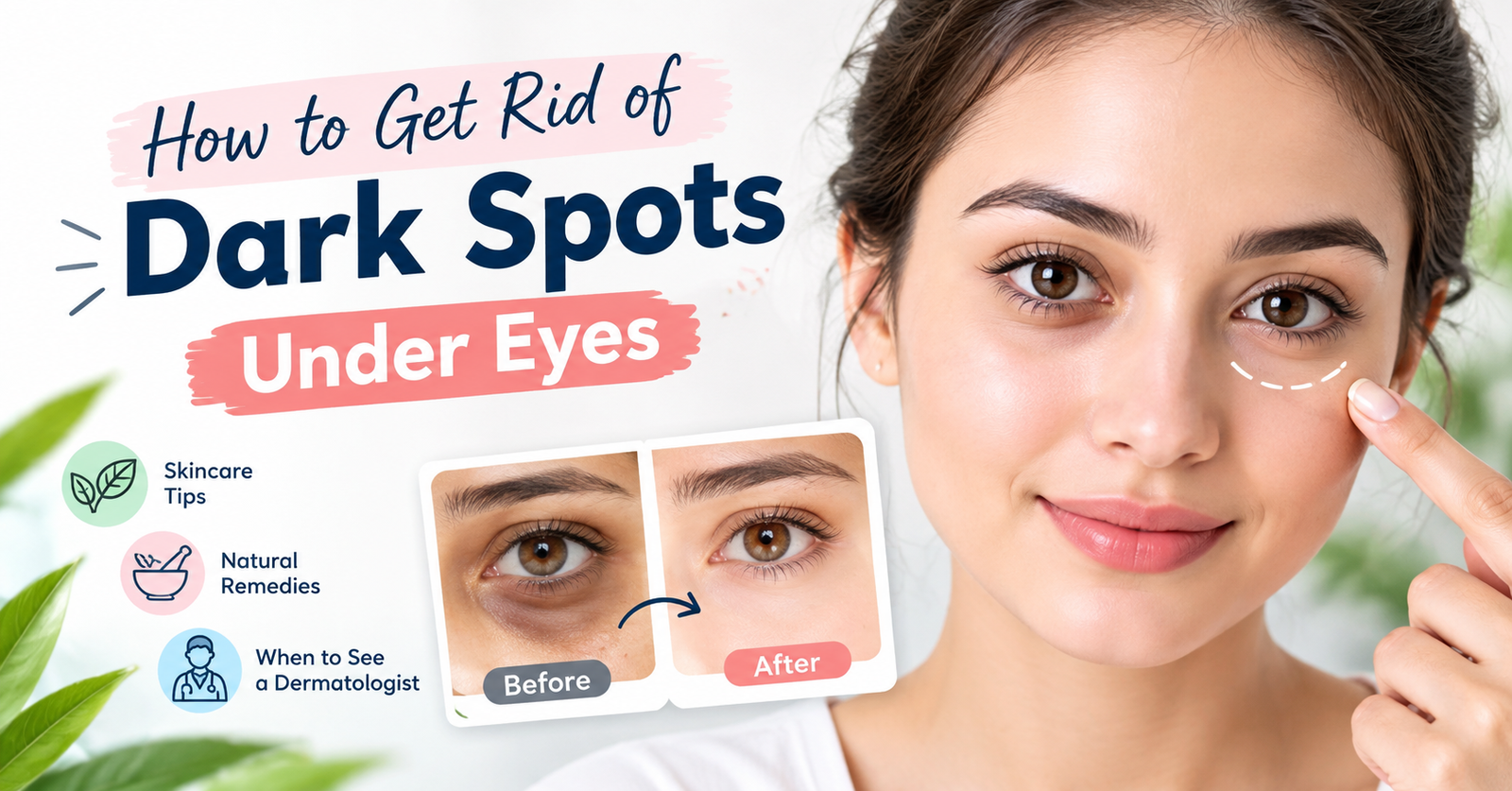
Someone glances at you and asks, “You okay? You look tired” — except you slept just fine. Those shadows under your eyes have a way of making that impression anyway. Dermatologists call this periorbital hyperpigmentation, and while it sounds alarming, it’s a harmless, extremely common skin concern — not a sign that something’s wrong with your health. The real question is what’s actually causing yours: genetics, sun exposure, thinning skin, poor sleep, or something as simple as too many hours staring at a screen. The cause matters more than you’d think, because it decides which fix will actually work for you. In this guide, we’ll break down exactly why dark spots form under the eyes, which remedies genuinely help, which ingredients to look for, and when it’s time to see a dermatologist instead of another home remedy..
What Causes Dark Spots Under Eyes?
Before you spend money on the wrong product, it helps to understand what’s actually happening under your skin.
Genetics and Hyperpigmentation
For a lot of people, under-eye pigmentation is simply inherited. Melanin-rich skin naturally has more pigment cells in this area, which can make dark spots more visible from a young age — no amount of sleep will change that, though treatment can still fade them.
Sun Exposure
The skin under your eyes is thinner than anywhere else on your face, which makes it especially vulnerable to UV damage. Years of unprotected sun exposure trigger melanin production, leading to stubborn pigmentation over time — one of the most overlooked causes of dark spots under eyes.
Aging and Thinning Skin
As we age, we lose collagen and fat beneath the eyes. This thinning skin makes the blood vessels underneath more visible, giving a bluish or brownish cast that’s often mistaken for “dark circles” but is really a structural change, not just pigment.
Allergies and Rubbing
Constant rubbing — from allergies, dry eyes, or eye makeup removal — breaks down capillaries and worsens pigmentation. If you deal with seasonal allergies, you’ve probably noticed your dark circles get worse during allergy season. That’s not a coincidence.
Lack of Sleep and Dehydration
Poor sleep and dehydration don’t create dark spots on their own, but they do make existing ones more visible by causing fluid retention and paler, duller skin around the eyes.
Lifestyle Habits (Smoking, Alcohol, and Diet)
Smoking restricts blood flow and speeds up collagen breakdown, both of which make under-eye skin look duller and more shadowed over time. Excessive alcohol dehydrates the skin, while a diet low in iron or vitamin K can make pigmentation and visible blood vessels more pronounced. None of these cause dark spots overnight, but they compound everything else on this list.
Chronic Stress
Stress doesn’t get talked about enough here, but it disrupts sleep quality and increases cortisol, which affects circulation and skin repair. If your dark spots seem to flare up during stressful weeks, this is likely part of the reason.
Dark Spots vs. Dark Circles vs. Hollows: Know the Difference
This is where a lot of people go wrong. Under-eye discoloration isn’t always the same thing, and each type needs a different fix:
- Dark spots (pigmentation) — brown, patchy discoloration caused by excess melanin. Responds well to brightening ingredients.
- Dark circles (vascular) — bluish-purple tint from visible blood vessels through thin skin. Needs ingredients that strengthen skin and improve circulation, not just brighten.
- Hollows/shadows (structural) — caused by volume loss, creating a shadow effect rather than actual discoloration. Skincare alone won’t fix this; it often needs filler or won’t fully resolve without a dermatologist.
Knowing which one you’re dealing with will save you from wasting money on the wrong products.
Home Remedies to Reduce Dark Spots Under Eyes
These won’t erase deep pigmentation overnight, but they’re genuinely useful for mild cases and daily maintenance.
Cold Compress
Wrap ice cubes in a soft cloth and apply for 5–10 minutes. This constricts blood vessels and reduces puffiness, which can make dark circles look less pronounced almost instantly.
Cucumber and Potato Slices
Both contain mild natural enzymes that have a soothing, slightly brightening effect. Chill slices in the fridge and place them over closed eyes for 10–15 minutes — an easy addition to a weekend skincare routine.
Almond Oil
Massaging a few drops of almond oil under the eyes before bed is a classic remedy. It’s rich in vitamin E, which helps nourish the thin under-eye skin over time.
Tea Bags (Green or Black Tea)
Both contain caffeine and antioxidants, which help tighten skin and reduce the appearance of vessels. Chill used tea bags and apply them for 10 minutes for a quick de-puffing effect.
Gentle Under-Eye Massage
Using your ring finger (it applies the lightest pressure naturally), gently tap or massage in small circles along the orbital bone — never directly on the thin skin under the lash line. This stimulates blood and lymphatic circulation, which helps drain built-up fluid and can visibly reduce puffiness and shadowing within minutes. Doing this for 1–2 minutes while applying your eye cream turns a passive step into an active one.
Best Ingredients and Skincare Products for Under-Eye Dark Spots
If you want results that go beyond temporary de-puffing, your eye cream or serum needs the right actives.
Vitamin C
A well-known brightening ingredient that helps fade pigmentation and protects against further sun-induced damage. Look for a stabilized, low-percentage formula specifically made for the eye area, since regular face serums can be too strong for this delicate skin.
Retinol (Use with Caution)
Retinol boosts collagen production and cell turnover, which helps with both pigmentation and thinning skin over time. Start with a low concentration eye cream and use it just a few nights a week — under-eye skin is sensitive and easily irritated.
Niacinamide
A gentler alternative to retinol that helps even out skin tone and strengthen the skin barrier. It pairs well with almost every other ingredient, making it a safe starting point if you’re new to treating dark spots.
Hyaluronic Acid and Daily SPF
Hydration keeps the under-eye area plump, which reduces shadowing. But the real non-negotiable here is SPF — no brightening ingredient will work if you’re not protecting the area from further sun damage every single day.
Daily Habits That Help Prevent Dark Spots
- Wear sunscreen or sunglasses daily, even on cloudy days
- Avoid rubbing your eyes — treat allergies and remove makeup gently
- Sleep with your head slightly elevated to reduce fluid pooling
- Stay hydrated and manage salt intake, which affects puffiness
- Cut back on smoking and alcohol, and eat a diet with enough iron and vitamin K
- Manage stress through small daily habits — even 5 minutes of breathing exercises or a short walk can help
- Be consistent — most brightening ingredients take 6–12 weeks to show visible change
When to See a Dermatologist
Home remedies and over-the-counter products can only go so far. It’s worth booking a dermatologist appointment if:
- Dark spots appear suddenly or asymmetrically
- They’re accompanied by swelling, itching, or pain
- Over-the-counter treatments show no improvement after 3 months of consistent use
- You’re considering stronger, in-office options
A dermatologist can also tell you definitively whether you’re dealing with pigmentation, vascular circles, or volume loss — which, as covered above, each need a completely different treatment approach. Depending on the cause, they may recommend:
- Chemical peels — to exfoliate away surface pigmentation and even out skin tone
- Laser therapy — targets excess melanin and stimulates collagen for thicker, less transparent skin
- Dermal filler injections — specifically for structural hollows, where volume loss (not pigment) is creating the shadow
These are more effective — and more expensive — than anything you’ll find over the counter, which is exactly why getting the right diagnosis first matters.
Frequently Asked Questions
Can dark spots under eyes go away permanently?
Mild pigmentation can fade significantly with consistent treatment and sun protection, but genetic or age-related discoloration usually needs ongoing maintenance rather than a one-time fix.
How long does it take to see results?
Most skincare ingredients need 6–12 weeks of consistent use before you’ll notice a visible difference. Patience matters more than product-hopping here.
Is under-eye pigmentation the same as dark circles?
Not always. Pigmentation is about melanin, while dark circles are often vascular or structural — see the section above for how to tell them apart.
Conclusion
Dark spots under the eyes are frustrating precisely because they’re rarely caused by just one thing — genetics, sun exposure, thin skin, allergies, lifestyle, and sleep all play a role, often at the same time. The good news is that once you identify what’s actually driving yours, the fix becomes much more straightforward: daily SPF, the right brightening ingredients, gentler habits around the eye area, and realistic patience with the timeline.
If you’ve been consistent for a few months with no change, that’s not a failure on your part — it’s a sign to bring in a dermatologist who can look at what’s really going on underneath the surface.